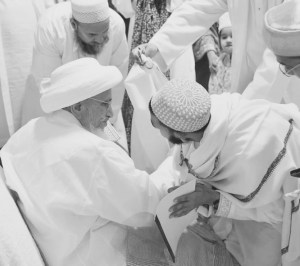
Pabos Jo Huwa Shah-e ‘Aali Janab Ka, Paaya Khitaab Usne Sa’adat Ma’aab Ka

در پردۀ اسرار کسی را ره نیست
زین تعبیهٔ جان هیچ‌کس آگه نیست
جز در دل خاک هیچ منزل‌گه نیست
مِی خور که چنین فسانه‌ها کوته نیست

Behind the veil of secrets, no one can grasp all truths.
No soul can be fully aware of its fate or destined route on its own.
The only refuge for humanity lies in acknowledging its ultimate return to the earth’s embrace.
So drink the wine of knowledge, for the tale of destiny is not short, there is still a long way to go.


The fundamental principle in epistemology is to always remember that we do not know everything.

It was September 2019 when I began living my lifelong dream. I had enrolled in a Bachelor’s program in Computer Science and Engineering at the Budapest University of Technology and Economics in Hungary. With the prospects of a successful career in sight, I was happily settling into my new life.

Then came COVID-19. The university shifted to online classes, and in March 2020, I decided to travel back home to Ajman to stay with my parents until on-campus sessions resumed. For a year, I continued my classes online. By the end of 2021, I was preparing to return to Budapest.

Around this time, in December 2021, Mufaddal Moula TUS visited Sharjah, and we had the Sharaf of hosting a zyafat at our home. During the zyafat, when I approached Moula, he inquired, “Tame su karo cho?”

I replied, “Moula mein Budapest ma parhu chu, hamna online classes yahan si lau chu, hawe dubara Budapest jais.”

Moula looked at me and, with concern, said, “Hawe yahan par aj raho, bawaji sathey. Tame wahan chala jaso toh bawaji sathey kon rehse?”

He then turned to my father and said, “Tamara dikra ne aik business ni line bhi aapjo.”

For a brief moment, my dream of studying in Budapest flashed before me. But then I realized that Moula was in front of me, and I revisited the fundamental principle of knowledge: I do not know everything. If anyone cares for me more than I care for myself, it is him.

I had already paid the term fees in Budapest. Transferring to a university in the UAE would mean starting the year anew, and the competitive job market here made my career prospects uncertain. Yet, with complete confidence and trust, I responded, “Jee, Moula.”

Shortly after I resumed my studies in the UAE, the Ukraine-Russia conflict erupted. Hungary, a close ally of Russia, faced severe economic disruptions, fee hikes, safety concerns for foreign students, and travel restrictions. The social environment deteriorated.

Had I remained in Budapest, I would have been alone, surrounded by uncertainty, while my parents back home would have been stressed and left to face everything on their own.

Today, I am nearing the completion of my Bachelor’s program and actively managing my own business, which we started right after the zyafat, as per Moula’s directives.

The Ponzo Illusion teaches us that due to our limited capacity to perceive all angles simultaneously, we may believe two identical lines are of different lengths because of perspective. Yet, they are the same.

My experience has taught me that instead of trying to determine the length of lines in any situation, we should draw the line of Moula’s directives beneath them. That line truly becomes our lifeline, shielding us from the fault lines of life.


Mohammed Bhai Mustansir Bhai Bhinderwala

Ajman, UAE


In the means of shukr and zikr, anyone who is willing to share his/her’s acquaintance, incident or any experience with Moulana Muqaddas RA or Moulana Mufaddal Saifuddin TUS can mail it to dm@tazkerat.org & md@tazkerat.org

Tab Tak Salamat Aap Rahein Khalq Mein Huzur, Jab Tak Baqa Jahan Mein Ardo Sama Ki Hai

As a nutritionist specializing in the care of diabetic and cancer patients, I have always been a steadfast advocate for the remarkable qualities of honey. Beyond its numerous health benefits, honey is nature’s ultimate preservative. Anything surrounded by its embrace is protected and safeguarded.

My story has a symbolic association with the above.

On the 7th of April 2024, 29th of Shahre Ramadan, I was waiting for Moula’s TUS didar after fajr namaz at Saify Mahal. I had been working on developing a game aimed at creating protocols and tools for paediatric cancer patients to test their efficacy levels. That morning, I was there to present the draft of my work to Moula TUS.

When Moula arrived, he asked, “Tame su karo cho?”

I replied, “Moula, mein nutritionist chu, diabetic aney cancer patients ne insulin guidance aapu chu.” As Moula TUS nodded, I presented the draft of the game on my laptop. Moula listened to my araz with keen attention. Then, to my utter astonishment, Moula said, “Tame aaney copyright karawi lejo.” I froze, caught off guard by his foresight and care. With a smile, Moula TUS repeated, “Copyright karawi lejo. Tamam logo ne, ibadullah ne bhi faido thai”.

I performed salam and Moula departed. I had touched honey.

Months passed. On the 21st of November, 20th of Jamad al-Ula, Moula graced our house in Itarsi with his presence. As my family members performed salam and presented their araz, my turn came. I had with me the final draft of the game, ready to present it to Moula TUS. Yet, before I could speak a word, Moula looked at me and asked, “Tame copyright karawi chuka cho ne?”

I replied, “Jee, Moula.”

With a radiant smile, Moula placed his Haath Mubarak on the game.

Even now, as I recall that moment, I can feel the sweetness of his beaming smile and the warmth of his protective Nazar Mubarak.

Having spent my life advocating for the protective qualities of honey, I experienced it in its truest and most profound sense that day. Moula’s TUS care was not just about ensuring the copyrights of the game, which I later realized was extremely crucial as I progressed in my PhD; It was his way of extending his assurance, his promise that he would always safeguard us, surrounding us in his love and protection just as honey preserves and protects whatever it embraces.


Behn Tasneem Abbas Bhai Kapasi

Jalgaon, India


In the means of shukr and zikr, anyone who is willing to share his/her’s acquaintance, incident, or any experience with Moulana Muqaddas RA or Moulana Mufaddal Saifuddin TUS can mail it to dm@tazkerat.org & md@tazkerat.org

Millat Ke Wo Rehbar Ko Hum Kabhi Na Bhulenge, Shah Saife Deen Sarwar Ko Hum Kabhi Na Bhulenge

Guardian angel: that’s how I remember Moulana Taher Saifuddin RA. From the most trivial issues to life-threatening hardships, he was always there as a saviour.

I was about 10 years old, a mischievous kid often deserving the beatings I got.

On one instance, it was Moulana Taher Saifuddin’s Milaad Mubarak and Moulana RA was in Mumbai. I would eagerly await his presence during such festivities because he would treat the children with mewo – a handful of sweets and chocolates.

On that special day, Moulana Taher Saifuddin RA was at Saifee Masjid. My grandmother reminded me to go and extend the felicitations. I rushed to Saifee Masjid to do salaam and collect my goodies. As I stood in front of Moulana RA, something strange transpired. Without thinking, I lifted my shirt and said, “Moula jo mane mara maa maare che.” I still don’t know why I did that.

Moulana Taher Saifuddin RA smiled and calmly told me to inform my mother that he wanted to see her. About ten minutes later, I stood before him with my mother. 

I vividly remember Moulana Taher Saifuddin RA looking at us keenly. He asked my mother, “Tamne khabar che aa kon che?” She stayed quiet. After a brief pause, he added, “Aa sagla mara bachao che, mara che, maro nahi ehne.”

His voice was firm, his gestures steady, and his eyes resolute.

My mother nodded, and I left with an intense feeling of protection and warmth.

Today, whenever I see a hardship befalling or a calamity trying to strike me, I transport myself to his Qabr Mubarak and hear his words: “Mara che, maro nahi ehne.”


Shk Saifuddin Bhai Husseinibhai Bhol

Mumbai, India


In the means of shukr and zikr, anyone who is willing to share his/her’s acquaintance, incident, or any experience with Moulana Muqaddas RA or Moulana Mufaddal Saifuddin TUS can mail it to dm@tazkerat.org & md@tazkerat.org
Behr-e Sakha o Faiz Tera Wo Hai Mojzan, Darya-e Be’kanaar Bhi Aya Shumaar Mein

In 1997, during Moulana Mohammed Burhanuddin’s RA visit to Bangkok, I was fortunate to be there. I would be around Moula RA through the day and night; from talaqqi to salaam, from takbeera to azaan, I got all that I had never even dreamt of.

Yet, there was something I had been praying for for many years. My hopes were low, but I knew if there was anyone who could change my situation, it was Moulana Mohammad Burhanuddin RA.

On one instance, during a qadambosi bethak, I performed salaam and with tears in my eyes, I uttered: ‘Moula mari shaadi ne ghana waras thai gaya, mara paase farzand nathi’.

Moula RA looked at me for some moments, and stated: ‘mari aankho ma dekhi ne kaho ke mein Karbala ni zyarat karwa jais’. Tears welled up in my eyes, and I looked up and responded: ‘Moula mein Karbala jais’.

Just as I was moving away, Moula RA stopped me, blessed me with a radiant smile, and proclaimed in an assertive and joyous voice: ‘pachi dikro thai to mara paase lawjo’.

Words cannot describe how I felt in that moment. The world around me stopped, and I could feel a child in my arms. My heart was brimming with gratitude and hope.

I went to Karbala shortly afterward. Burhanuddin Moula RA visited Karachi the next year, and I went to Burhani Mahal with my son. As Moula RA passed by us, with tears in my eyes and a child in my hands, I said: ‘Moula aa farzand aapye aapu che, aapye farmayu hatu mara pase lai ne awjo’.

Moula RA stopped, graced us with a warm, reassuring smile, blessed my son with his Nazar Mubarak, and walked forward to numerous other mumineen who were most certainly standing there just like me, blessed by Moulana Mohammad Burhanuddin’s RA touch of life.

I am just among the thousands.


Alamdar Hussain Bhai Darugar

Karachi, Pakistan


In the means of shukr and zikr, anyone who is willing to share his/her’s acquaintance, incident, or any experience with Moulana Muqaddas RA or Moulana Mufaddal Saifuddin TUS can mail it to dm@tazkerat.org & md@tazkerat.org
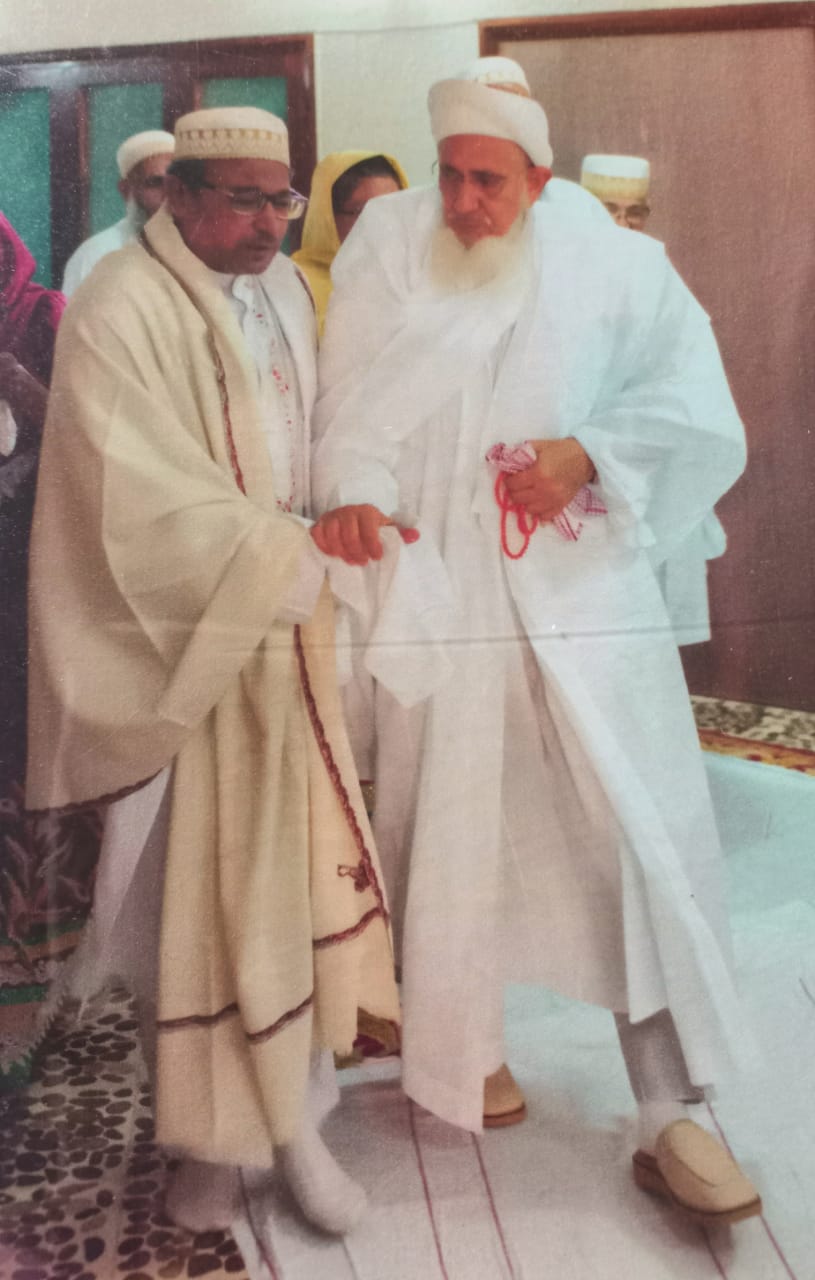
Wo Sar Buland Huwa Hai Jahan Mein Ahmed, Huzur-e Sarwar-e-Deen Jisne Sar Jhukaya Hai

The year 1412 AH held immense significance in my life. After facing numerous challenges, I managed to secure a US visa to pursue computer graphics courses. In the same year, during my time in Dubai, I was blessed with the khidmat sharaf of transcribing the collection of Syedna Taher Saifuddin’s RA Qasaid Sharifa.

Life seemed to be going perfectly, and I was engulfed by happiness and satisfaction.

Ashara Mubarakah in 1413 AH was held in Pune. After completing half of the project in Dubai, I returned to India for the occasion. Unfortunately, my Dubai visa had expired, and I was in the process of renewing it while continuing my work at Badri Mahal in Mumbai.

One fateful Wednesday at Victoria Terminus station, as I bid farewell to my sister, a pickpocket snatched my passport from my kurta pocket. Panic and sorrow overwhelmed me as I realized the loss of not just my identity but also my dreams.

With a heavy heart and tearful eyes, I went back to the station and searched the entire place relentlessly, hoping against hope to find the passport. I continued doing rounds of the station and asking people through the next day.

On Friday, in the depths of despair, I went to Raudat Tahera, put my head on the Qabr Mubarak, and pleaded with tears rolling down: “Ae Moula, mane koi bhi tarah si aaj naj din ma mari passport mili jai, aap mari muraad koi bhi tarah poori kari aapye”.

With my heart laid bare, I was walking around the Qabr Mubarak when an acquaintance approached me and inquired about my distressed state. I informed him what had transpired to which he replied: “Taher Saifuddin Moula si maango, aap no waseelo lo, ye kai bhi kari sake che”.

After zyarat, I went to Badri Mahal to continue the work. Shortly afterward, I returned home for lunch as I was unable to lift myself up to continue the work with the same energy.

Then, at around 2:30 PM, an unexpected call came from my office colleague. A person had come with my passport and insisted on handing it over to me personally. Overwhelmed with shock and gratitude, I rushed to the office, but the person had already left, leaving an address behind.

Following the address, my colleague and I met a Madrasi hawker with a stall near VT station. He handed me my passport with a calm smile, seemingly curious about my reaction. As I stood there, puzzled, he began recounting the sequence of events leading to the recovery of my passport.

He had found the passport two days ago, after witnessing a man across his stall trying to hide and flipping through its contents. The man eventually discarded it near his stall, and the Madrasi Bhai picked it up, safeguarding it until the next day. That morning, he noticed the picture of me wearing a topi in the passport and asked his neighboring Mumin Bhai, who wore a similar topi, if he recognized the owner. The Mumin Bhai replied negatively but told the Madrassi Bhai that he would certainly ask around.

All of this was happening while I was at Raudat Tahera.

According to the norm, the Mumin Bhai went to the Badri Mahal masjid for Jumua namaz. He sat right next to the person I had met a short while ago in Raudat Tahera. Amidst a usual conversation, the Mumin Bhai mentioned the passport with his Madrasi neighbor having the name ‘Saifuddin’. The person who knew me curiously inquired if the name was ‘Shabbir’ and not ‘Saifuddin’. The Mumin Bhai said that he was not sure. After the namaz, they both went to the Madrasi Bhai which led to the serendipitous return of my lost passport.

For some, it may appear as a series of fortunate coincidences, but for me, it was a divine intervention, a testament to the power of Moulana Taher Saifuddin’s blessings. As my friend had said, “Moulana Taher Saifuddin kai bhi kari sake che”.

Moulana Mohammed Burhanuddin RA once stated “mumineen tamara sagla paase walayat nu passport che”.

And indeed, it does wonders.


Sheikh Shabbir Bhai Saifee

Houston, USA


In the means of shukr and zikr, anyone who is willing to share his/her’s acquaintance, incident, or any experience with Moulana Muqaddas RA or Moulana Mufaddal Saifuddin TUS can mail it to dm@tazkerat.org & md@tazkerat.org

Jaan Be’lab Hai Ye Tera Wasl Talab Ae Aqa, Ba’khuda Ab To Ise Shehd-Dahani Aawe

دی گفت طبیب از سر حسرت چو مرا دید
هیهات که رنجِ تو از سرِ قانون شفا رفت
Upon observing my distressing condition the doctors uttered in despair;
Your state (in love) is beyond any possibilities of cure.
– Hafez Shirazi

At the age of eight, I endured excruciating, relentless pain in my abdomen. Those years are etched in my memory as a cacophony of screams, tears, and convulsions while I writhed on the bed, tormented by the pain inside me.

My parents, witnessing my anguish, consulted several doctors in Karachi. One of them proposed the possibility of a twisted knot in my intestines, obstructing the natural flow of digestion and inflicting unbearable pain; however, nothing like that showed up in the reports. As the pain mercilessly intensified, a doctor prescribed a restrictive diet, allowing me to consume nothing but clear soup and toast, in the hope that it might provide temporary relief until a definitive diagnosis was made. For about six months, I dutifully consumed nothing else; yet, the pain kept worsening.

The specialists in Karachi, their brows furrowed with grave concern, grappled with the confounding enigma that was my condition. They probed and prodded, inserting enema tubes, and conducting X-rays repeatedly, but their efforts proved futile. Amidst the searing pain, I screamed and wailed. Finally, in a desperate final gambit, a specialist prescribed potent penicillin antibiotics. For thirty days, I endured the piercing sting of the penicillin injections. My body withered away, my strength evaporated, and I was reduced to a hollow shell of my former self. The school became a distant memory as it was eclipsed by the consuming pain that relentlessly gnawed at me.

Desperate to find an answer, my parents took me to Europe when I reached the age of nine. The doctors suspected tuberculosis and I underwent multiple tests in London, Germany, and Switzerland. Yet, to everyone’s astonishment, the results came back clear, providing no tangible medical solution to my distressing state.

Dejected and filled with dimming hopes, we returned home, the pain clinging to me like an indomitable specter. From enemas to penicillin, from one hospital to another, we endured an interminable cycle of agony and despair for another year. My parents spared no effort in their quest to alleviate my pain, yet their hearts broke when a family doctor informed them that the medicines I was consuming would start affecting my other sensory abilities.

The tender faces of my parents, once adorned with smiles, now wore a shroud of gloom and desolation. I was on the cusp of turning ten, and any semblance of improvement in my condition seemed an elusive dream. Doctors had resignedly counseled my parents to prepare for the worst, urging them to brace themselves for surgery, a desperate measure in the face of uncertainty.

Then, a ray of hope pierced the darkness that engulfed our lives. Syedna Taher Saifuddin RA graced Karachi with his presence that year, and we were blessed to host a zyafat at my kaka, Fakhruddin Bhai Valika’s home. Clutching onto the remnants of hope and with tears streaming down her face, my mother placed me before the revered presence of Syedna Taher Saifuddin RA, crying out, “moula mari dikri ne 2 waras si pait ma ghanu dard che, doctors ne khabar nathi parti ke su thai che, aim kahe che ke operation kari ne pait kholi ne dekhse, Moula mari dikri nu pait kai kabaat (cupboard) to nathi, ke kholi ne dekhse, hawe mein aap na paase awi chu, aap mane farmawo mein su karu, mein ghani mushkil ma chu”.

Attentively, Taher Saifuddin Moula RA listened to my mother’s anguished plea, his face adorned with a serene smile. And then, with calm authority, he spoke, “aik kilo mudh (honey) aney aik kilo kalonji lai ne ridge house par awjo”.

The following day, carrying one-liter honey and one-kilo black cumin we made our way to the ridge house. There, Syedna Taher Saifuddin RA blessed me with his nazar mubarak, his eyes filled with compassion, pronounced shifa, and stated: “roz ehne fajare, nahaar-mu, saat dana kalonji aney shehed na apjo, 2 waras tak aapjo, aney bani sake to zindagi bhar aapjo”.

Overwhelmed, my mother responded, her voice trembling: “Moula shifa nu shehed to khatam thai jase”. With a beaming smile, Taher Saifuddin Moula RA replied: “shifa ni kalonji che ne, ye rehse”.

Today, at the age of seventy-six, I stand as a testament to that lofty, miraculous, and fatherly presence of Syedna Taher Saifuddin RA; I have never felt any chronic pain in my abdomen from that fateful day to date. Although we never found out about the problem, my parents knew where to seek the answer.


Mulla Ruqaiyyah Bai Millwala

Houston, USA


In the means of shukr and zikr, anyone who is willing to share his/her’s acquaintance, incident, or any experience with Moulana Muqaddas RA or Moulana Mufaddal Saifuddin TUS can mail it to dm@tazkerat.org & md@tazkerat.org

Taweez Sheh Ke Haath Ki Hai Nuskha’e Shifa, Go Bu Ali Ke ‘Ehd Mein Apne Matab Nahin

آنچه من در عشق جانان يافتم

کمترين چيزها جان يافتم

Among all that I have gained in the love of the beloved;

The least significant is ‘life’.

In July 2017, my mother’s health suddenly started to deteriorate. After figuring out that the routine medication is not helping, I took her for an executive full-body check-up at Agha Khan Hospital.

The reports came out indicating something unusual with the blood and my fear intensified. The doctors suggested an immediate bone marrow examination. The results showed lymphoma: cancer.

I was left numb and devastated, unable to process the news. My world was crumbling apart.

Witnessing my mother’s deteriorating health, unable to eat, move, or respond, was excruciating. The thought of her undergoing chemotherapy was unbearable, and I was not ready to see her suffer.

As the chemo sessions started, my mother’s condition kept worsening by the day. Due to her weak state, the sessions that were supposed to take place one after another uninterruptedly had to be done in the intervals of eleven days.

The doctors had already informed me of the worst.

The next month, Mufaddal Moula TUS arrived in Karachi for Ashara Mubarakah 1439 H. The very next day, I took my mother to the qadambosi bethak at Burhani Mahal.

With tears rolling down my eyes and slowly moving the wheelchair with my mother, I reached Moula TUS and uttered: “moula mara maa ne cancer che, aap shifa aapi do”.

Upon hearing, Moula TUS looked into my eyes and gestured to lift my mother up from the wheelchair.

Moula TUS pronounced “khuda shifa aape”, extended his haath mubarak and brushed it on my mother’s face, and blessed us with a beaming smile.

From that day onwards, my mother has never needed a chemotherapy session or any treatment for that matter.


Mulla Saifuddin Bhai Joriawala

Karachi, Pakistan


In the means of shukr and zikr, anyone who is willing to share his/her’s acquaintance, incident or any experience with Moulana Muqaddas RA or Moulana Mufaddal Saifuddin TUS can mail it to dm@tazkerat.org & md@tazkerat.org

Shaikho Ka Ilm Zor Jawano Ka Tujh Mein Hai, Tu Hudd-e-Mushtarik Hai Goya Shaikh-o-Shabaab Mein

Doret begardam (may I circle around you forever): a Persian phrase to express the highest affection and love for someone residing in the heart as the focal point, commonly used while addressing the parents, is what I utter whenever I remember Syedna Mohammad Burhanuddin RA and relive the moments I spent in his presence during his visits to Chicago.

Of all the unforgettable instances, the most elating for me is what happened on the evening of the 4th of July, 1986.

It was the close of the day and Burhanuddin Moula RA, along with Busaheba Amatullah Aisaheba QR, was sitting in the backyard of our house over the evening snacks. Suddenly, the calm and stillness of a routine windy night in Chicago were interrupted by the loud booms and whistles of the fireworks.

With his eyes lit up, Moula RA inquired: “aa kena waste che”?. I responded: “Moula aaje 4th of July che, ehna fireworks che”.

“Mane lai jau”, Moula RA replied with a pearly smile.

I stood there rooted to the spot and only managed to utter “Jee Moula”. Like the state of anyone living in Chicago and driving to the downtown, I was consumed with the thought of the most trivial, yet critical issue: where would I find a parking spot for Moula RA to step out of the car? And considering it was the night of the 4th of July, I was convinced it was impossible.

My heart sank.

I entered downtown only to find that the situation was much more unfavorable than I had expected. With the police patrolling the entire area, I kept driving along in search of a place to stop the car briefly so that at least Moula RA could step out; however, in vain.

After a while, I managed to spot a place in a no-parking zone around Buckingham Fountain; panic-stricken and nervous I pulled the car over. The next moment, I was surrounded by the police sternly gesturing and directing me to get the car moving.

Numb and dejected, I attempted to talk through with the officer approaching the car in a cracking voice from my driving seat. Just as I began to talk, the officer interrupted and directed me to drive on in a tough tone.

Lost in bewilderment and desperate to seek a way so that Moula RA could step out, I uttered to the officer in a pleading voice: “Sir, I have an old man with me in the car“. The officer leaned forward and glanced at Moulana Mohammad Burhanuddin RA in the rear seat; Moula RA greeted him with a smile.

For a good few moments, the officer stood there in awe. Thereupon, reverently nodding, he gestured towards Moula RA to exit the car and drew back.

Calm and collected, Moula RA gracefully turned to step out; I was sweating and gasping for breath. Just before leaving the car, Moula RA placed his haath mubarak on my shoulder with a gentle grip, blessed me with a healing smile, and articulately stated: “old man na kaho”.

For the next hour or more, I was circling around Chicago’s downtown in my car with tears in my eyes revisiting what had just transpired as it resonated with Moulana Taher Saifuddin’s RA words for Moulana Mohammad Burhanuddin RA: ‘this eternally young [nawjawaan] is me, and a boundless carrier of knowledge’.

1-1
Moula RA in Shk Ammar Bhai’s backyard in 1986.
1 (1)
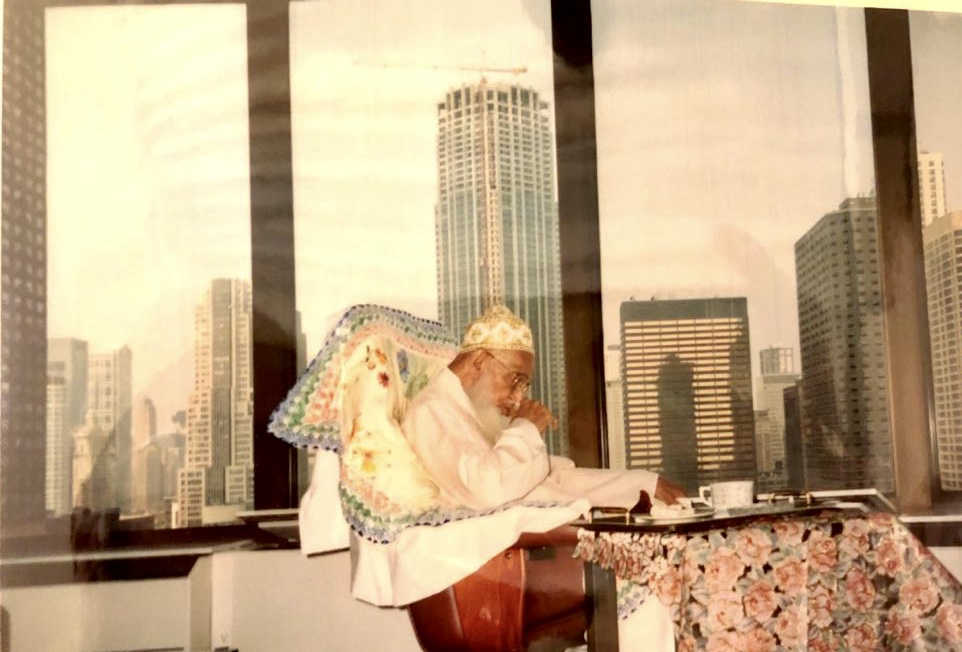
Moula RA at Shk Ammar Bhai’s apartment in downtown in 2001.

The image is the exclusive property of the contributor and Tazkerat, and may not be copied, printed or otherwise disseminated without permission.


Shk Ammar Bhai Moosaabhoy

Chicago, USA


In the means of shukr and zikr, anyone who is willing to share his/her’s acquaintance, incident or any experience with Moulana Muqaddas RA or Moulana Mufaddal Saifuddin TUS can mail it to dm@tazkerat.org & md@tazkerat.org

Aankhon Mein Jiski Hai Tere Khaak-e-Qadam Ki Qadr, Ikseer Ki Jahaan Mein Usko Talab Nahi

The desire to witness the spectacle of metal turning into gold and the miracle of the dead coming back to an immortal life have been at the heart of mankind’s pursuit of the elixir also known as the philosopher’s stone.

I can say with utmost conviction that I have lived the aforesaid transformations.

It was the year 2016 and Mufaddal Moula TUS was in Karachi for Syedna Taher Saifuddin’s RA milaad when I first got a glimpse of Moula in person. Taken along by my mother for the bethak I was lumbering behind her with a broken and bleeding toe amidst a massive crowd of women crying.

Hesitant, confused, and wanting to slip out of the queue at the first possible chance, I somehow reached the bethak. As I looked up to Moula, my eyes met his warm gaze and I froze.

The elixir was in effect. My life changed.

Fast-forwarding to 16th September 2017, Moula was in Karachi for Asharah Mubarakah and I was heading to Burhani Mahal for the bethak; however, this time with eyes full of tears, heart exploding with the desire to acquire the sight of his beaming countenance, and every inch of my existence willing to swim oceans and walk scorching deserts to get a touch of his hands.

This was not me. I was unable to comprehend what was happening to me. It was the elixir-pull.

As I neared Moula, I sobbed. Unlike the norm of salaam, I clasped both the arms of Moula and cried: “moula mein aapne nai choru, jab tak aap nahi kahenge ke aap mere ghar aaenge”.

The dealings of the bethak came to an impromptu halt.

Moula responded with a sparkling grin as I remained in the same state and repeated the very words for a fine ten to fifteen seconds.

As I walked back, the reactions on the faces of the people around Moula made me realize that I might have landed myself in hot water and that I will never be allowed to be in this place again.

Regardless, somehow, I was at the bethak again the very next day with my mother.

I was standing at a side in the hall eagerly hoping no one would remember me from the previous day when a behnsaab approached and asked me to get in the qadambosi queue. I hesitated initially as I did not want to be in the spotlight again after creating a scene less than twenty-four hours ago but submitted myself into the line upon insistence.

As I neared Moula, I saw the smile on his face widening, and making use of that, I voiced: “Moula mein aapko remind karwane aayee hun ke aapko mere ghar aana hai”.

The buzzing in the hall fell into complete silence as everybody stood in shock and awe.

Moula nodded and I bolted out of the hall.

On the 8th of October, Sunday, I was informed that Moula wished to visit my house. He remembered, was my first reaction to the news. As we scrambled to make preparations, I felt the house was grooming itself for Moula’s visit.

When I saw Moula walking towards my house, I broke down in tears in front of him and he stated: “pehla din awi ne mane kidu hatu ke mara ghare padharo, mein awi gayo”.

The next fifteen minutes seemed like a lifetime. We poured our hearts out to him in form of words, tears, and emotions. He listened to all of it, perceived the unsaid, and placed his haath mubarak on us assuring we need not worry as he is always going to be there.

Just before Moula was about to leave, he looked at me as I had my gaze fixated on him. My heart was crying a lot that I could not bring to words but I could perceive Moula was hearing it all.

At that moment, with tears running down my face and hands folded, I uttered: “I love you so much Moula”.

With moist eyes and a warm smile, Moula looked at me as a father would regard his daughter who has come back to life from death.

What is an elixir? The answer rests below.

Mufaddal Moula arriving at Amatullah (Ambreen) Behn’s house.

The image is the exclusive property of the contributor and Tazkerat, and may not be copied, printed or otherwise disseminated without permission.


Behn Amatullah (Ambreen) Fakhruddin Bhai Valika

Karachi, Pakistan


In the means of shukr and zikr, anyone who is willing to share his/her’s acquaintance, incident or any experience with Moulana Muqaddas RA or Moulana Mufaddal Saifuddin TUS can mail it to dm@tazkerat.org & md@tazkerat.org

Ye Baag’baan Ke Qadam Jis Chaman Mein Jaawe To Phir, Na Us Chaman Mein Kabhi Aafat’e Khizaan Jaawe

“Mein chu”, said Moulana Mohammad Burhanuddin RA when I thought everything was over.

It happened on the 25th of March, 2008 back when I was expecting my second child. The pregnancy period was pretty bumpy during which I once had a dream where Moulana Taher Saifuddin RA and Moulana Mohammad Burhanuddin RA were standing on the peak of a mountain with a worried and concerned look.

I told my husband about the dream; however, we were unable to figure out a context.

When my delivery was due, I was admitted to the Lady Dufferin Hospital in Karachi and due to some unforeseen complications, the doctor had to undertake a caesarean delivery. The baby was delivered healthy; however, I remained half-conscious and kept screaming out of an unusual pain.

My grandmother, father and mother were there at my side through the night and I could hear them saying that the way I was screaming was worrisome and that I should be inspected. Suddenly, my father saw that there was a heavy flow of blood coming out of my body and he started shouting in the hospital for help.

Panic-stricken and terrified, the nurses rushed in and called the doctor immediately.

Upon witnessing my state, the doctor informed my mother that an urgent surgery was required, and to call my husband in order to sign the consent form as I only had slim chances of survival. The uterus was infected and had to be operated out.

Crushed and heartbroken, my mother was continuously reciting Maulana Ali’s AS munqabat. I was unable to move or respond.

Just as they were preparing for the surgery, I saw a vision of Moulana Mohammad Burhanuddin RA standing at the side of my bed with a tasbeeh in his hand – just like I had seen him in the dream with Moulana Taher Saifuddin RA earlier – this time, during a plight like a mountain.

In immense pain and tears flowing down, I turned to Moula RA and attempted to pronounce some words. Before I could say anything, Moula RA raised his haath mubarak and said “mein chu”.

I couldn’t feel the pain. It simply disappeared.

The doctor was stunned to find that the uterus had miraculously taken it’s place and the bleeding had stopped; the person who saw slim chances of my survival a moments ago discharged me shortly afterwards.

“Mein chu” is all one needs to battle the pains and fight the hardships – in this life and the hereafter


Behn Khadija Mustafa Bhai Thekedaar

Karachi, Pakistan


In the means of shukr and zikr, anyone who is willing to share his/her’s acquaintance, incident or any experience with Moulana Muqaddas RA or Moulana Mufaddal Saifuddin TUS can mail it to dm@tazkerat.org & md@tazkerat.org