Madad: a word we say often, usually when we need help. It comes from the Arabic madda: to extend, to grow, to increase. So madad is more than help. It is an extension of oneself toward another, reaching out with care, lifting them not merely out of difficulty, but leaving them better than before. True madad is not limited by distance. It reaches.
Those who have experienced it are fortunate.
I am one of them.
After Ashara Mubaraka in Chennai, we travelled to Ooty with our family.
It was the 14th of Moharram, our last day there, and we were on our way back. The road wound through the mountains, with a steep hillside on one side and a sheer drop on the other, barely wide enough for two buses to pass.
We had stopped briefly for sightseeing before continuing to the airport. When we returned to our bus, none of us realized at first that my twelve-year-old daughter, Tasneem, was missing.
A few seconds passed before the thought struck us. Where is she?
Then a bus came to an abrupt halt behind ours. Before I even turned around, something inside me went cold. The first thing we saw was her shoes. Then her glasses. Lying separately on the road.
I don’t remember running. I only remember suddenly being there.
Tasneem lay motionless about thirteen feet away, blood flowing from her ears. A speeding bus had struck her and thrown her across the road.
We lifted her into the same car we had arrived in and rushed to the nearest hospital. The CT scan showed a fractured skull and a brain hemorrhage. The doctors told us her condition was life-threatening. We should prepare ourselves for the worst.
They did not have to say much. I could already read it on their faces.
For nearly two hours, panic and grief settled over us with nowhere to go. Then the doctors explained that she needed a hospital with more advanced facilities. They stabilized her enough for the journey and transferred her to Coimbatore, giving us little to hold on to except hope.
At Sri Ramakrishna Hospital in Coimbatore, we saw a manifestation of madad.
Within moments, members of the community had gathered around us. Food arrived. Financial help came without being requested. Doctors stepped forward. Everyone gave whatever they could, as though Tasneem were their own daughter.
The doctors told us the next seventy-two hours would be critical. If she remained unconscious for too long, the brain damage could become permanent.
Those seventy-two hours did not pass. They sat on our chests.
Whether Tasneem would stay with us or whether she would ever wake up as the same child, we would only know when they were over.
We needed madad. So, we sought it in the only way we knew how.
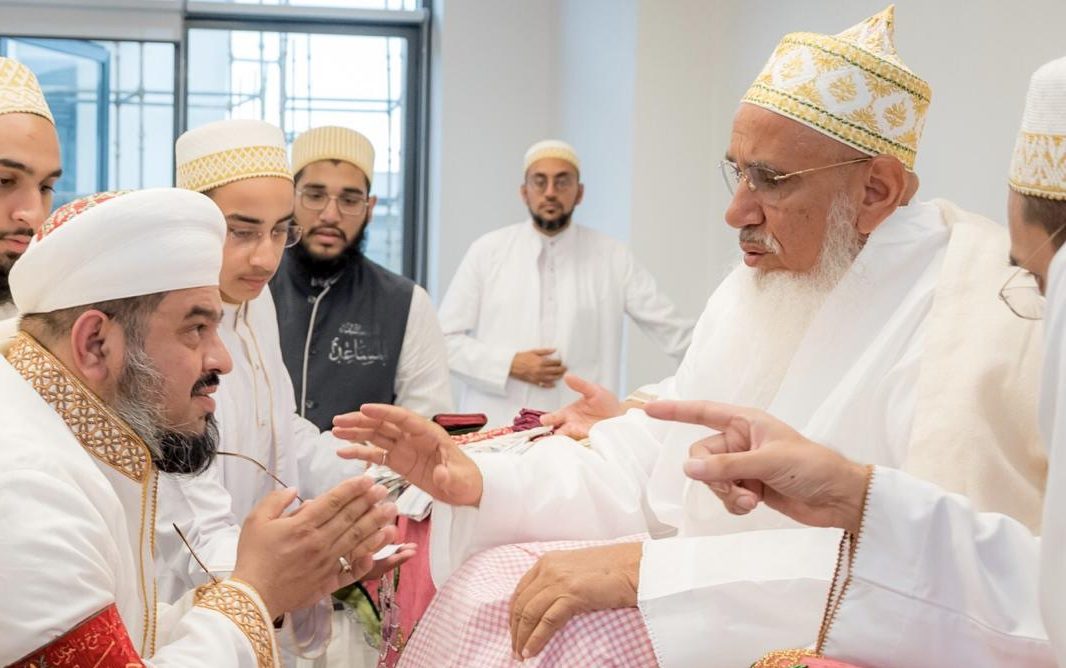
We kept doing araz to Aqa Moula TUS for dua. On one occasion, Tasneem’s photograph was placed before Moula TUS, and he said:
“Fikr na karo, ye jewa hata tewa thai jase, balke haji behtar thai jase.”
The moment I heard those words, something inside me finally loosened.
Before that, we had been clinging to hope. Now, we held on to certainty. We knew, then, who was truly in charge.
Madad had reached us.
Tasneem opened her eyes within forty-two hours. The doctors had warned us that she might lose her memory completely.
We held on instead to Moula’s words.
Whenever she regained consciousness, we would show her photographs of Syedna Mohammed Burhanuddin RA and Syedna Mufaddal Saifuddin TUS.
Each time, she would quietly say,
“Moula Mohammad. Moula Mufaddal.”
She was still with us. She was still herself. Her recovery continued to surprise everyone. The doctors had expected her to remain in the ICU for at least fifteen days.
She was discharged on the sixth.
From there, we went straight to Chennai. To the source of the madad that had carried us this far.
That very day, I presented the complete araz before Aqa Moula. He blessed Tasneem with a warm tabassum and did dua for her.
Standing there, I finally allowed myself to cry. Not from fear this time. But from gratitude.
Madad was still extending.
We remained in Chennai for the rest of the month. Tasneem got the Sharaf of didar every day, and with each passing day we watched her take another step towards recovery.
A month later, we returned to Dubai.
Our daughter, who had been struck by a speeding bus, suffered a fractured skull and brain hemorrhage, and spent days in intensive care, walked beside us, laughing just as she always had.
We thought about the madad that had carried us through. We remembered it as something that had happened, something that belonged to the past.
But madad from where we had sought it does not end.
It never will.
After several months, during Aqa Moula’s most recent Karbala safar, we received an official message in Dubai informing us that Aqa Moula had placed Tasneem’s photograph upon the Zarih Mubarak of Imam Husain AS and did dua for her.
It came to us as a complete surprise. It was a quiet reminder that there is someone who cares for us more than we are able to care for ourselves.
Even today, it continues to reach us.
That is the truest meaning of madad: a connection of care and love that never ends.
Behn Durriyah Raghib
Dubai, UAE
(Interviewed by Mulla Mustansir Bhai Goribai on behalf of Tazkerat)
In the means of shukr and zikr, anyone who is willing to share his/her’s acquaintance, incident or any experience with Moulana Muqaddas RA or Moulana Mufaddal Saifuddin TUS can mail it to dm@tazkerat.org & md@tazkerat.org or visit stories.tazkerat.com