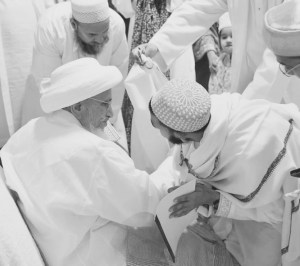
Ikseer Laa Ke Rakho To Chu’ae Na Haath Se, Jiss Ne Uthai Khaak Tere Aastaan Ki

جز آستان توام در جهان پناهی نیست
سرِ مرا به جز این در حواله گاهی نیست

Except for Your threshold, I have no refuge in this world;
For my head, there is no place of surrender but this door.

— Hafiz Shirazi

Touch is the first sense through which we meet the world, and the last to leave us as we stand close to death. It is often said that touch comes before sight, before speech. It is our first language and our final one, and it never lies. Our bodies seem to agree. Even before birth, a child is wrapped in fine hairs, lanugo, as if the body is preparing itself to feel before it learns to see or speak.

That is why touch holds the ability to heal. A held hand can calm pain in a way words never can. At the moment of death, it may feel as if the comfort of touch is taken away, but those who have felt the touch of the soul know something else. They know they are not alone.

On the 13th of October 2023, my daughter Nafeesa met with an accident at school and broke her arm. She was in severe pain when we rushed her to the hospital. The fracture was serious. She needed immediate elbow surgery, and a steel wire was inserted.

The surgery took place the next day, on the 14th of October. We were told that the wire and plaster would be removed after a month. Each day, we reassured Nafeesa that she was getting better, that soon she would be able to use her hand normally again.

We held on to that hope.

Finally, on the 14th of November, the plaster and wires were removed. Her arm looked fine. She could move her elbow without pain. We felt relieved. But moments later, Nafeesa said something that froze us. She said she could not feel her thumb. It felt as if it did not exist. Our relief vanished. We rushed back to the hospital. The doctors were confused and visibly shaken. We were told to wait for a few days. Perhaps, they said, it was just the effect of having the plaster on for so long.

We could see from their faces that something was not right. We overheard them quietly suggesting that the wire insertion might have caused this.

We returned home. Nafeesa tried to hold a pencil. She could not. We were devastated. There was nothing to do except wait and hope.

It was during this difficult time that we learned that Mufaddal Moula TUS would be visiting Karachi. The news felt like a gentle touch on the soul.

On the 20th of November 2023, we went to Aqa Moula’s bethak with Nafeesa and an araz in our hands, seeking shifa. Moula read the araz. I said softly, “Moula, haath na angutha ma jaan nathi.” Moula paused. He looked at Nafeesa and asked, “Aim kem jaan na hoi?” He then asked the doctors present to understand the situation fully. After listening, Moula mentioned a specific doctor and instructed us to consult him.

On the 25th of November, we went to see the doctor Moula had directed us to. Despite having a waiting list of over two months, he saw us immediately upon learning that Moula had sent us. He examined Nafeesa’s thumb carefully and his concern was evident. He told us that this condition was most likely a result of the surgery and that it was uncommon. He tried different methods, but Nafeesa felt nothing. He advised us to continue with a splint bandage for a few months. If there was still no improvement, he said, another surgery might be the only option, and even then, the chances of the thumb functioning normally were grim.

His words left us with very little hope.

The next day was Sunday. Moula was blessing the shops of the mumineen with qadam mubarak. He was present at a shop across from my house. I stood there for didar, holding Nafeesa in my arms, tears in my eyes. I had removed the splint from her hand. In my heart, I kept repeating: “Moula, aap shifa aapso.”

Moula came out of the shop and walked toward where we were standing. I could not speak. Not a word. I only said “Moula” and brought my daughter forward. Moula looked at her, smiled, and gently held Nafeesa’s very hand with his haath mubarak. He held it for a few seconds, smiled again, and moved on.

I returned home overwhelmed with gratitude, calm, and a quiet sense of certainty.

As we were still talking about what had just happened, something caught my eye. Nafeesa was lifting and holding things normally, easily, naturally. We stood still. None of us could believe it.

It was not the same hand. It was a hand that had been touched and held by the one who keeps reminding us that we are never alone.

Not here. And not in the hereafter.


Behn Batool Juzer Bhai Abadaniwala

Karachi, Pakistan


In the means of shukr and zikr, anyone who is willing to share his/her’s acquaintance, incident or any experience with Moulana Muqaddas RA or Moulana Mufaddal Saifuddin TUS can mail it to dm@tazkerat.org & md@tazkerat.org

Tab Tak Salamat Aap Rahein Khalq Mein Huzur, Jab Tak Baqa Jahan Mein Ardo Sama Ki Hai

As a nutritionist specializing in the care of diabetic and cancer patients, I have always been a steadfast advocate for the remarkable qualities of honey. Beyond its numerous health benefits, honey is nature’s ultimate preservative. Anything surrounded by its embrace is protected and safeguarded.

My story has a symbolic association with the above.

On the 7th of April 2024, 29th of Shahre Ramadan, I was waiting for Moula’s TUS didar after fajr namaz at Saify Mahal. I had been working on developing a game aimed at creating protocols and tools for paediatric cancer patients to test their efficacy levels. That morning, I was there to present the draft of my work to Moula TUS.

When Moula arrived, he asked, “Tame su karo cho?”

I replied, “Moula, mein nutritionist chu, diabetic aney cancer patients ne insulin guidance aapu chu.” As Moula TUS nodded, I presented the draft of the game on my laptop. Moula listened to my araz with keen attention. Then, to my utter astonishment, Moula said, “Tame aaney copyright karawi lejo.” I froze, caught off guard by his foresight and care. With a smile, Moula TUS repeated, “Copyright karawi lejo. Tamam logo ne, ibadullah ne bhi faido thai”.

I performed salam and Moula departed. I had touched honey.

Months passed. On the 21st of November, 20th of Jamad al-Ula, Moula graced our house in Itarsi with his presence. As my family members performed salam and presented their araz, my turn came. I had with me the final draft of the game, ready to present it to Moula TUS. Yet, before I could speak a word, Moula looked at me and asked, “Tame copyright karawi chuka cho ne?”

I replied, “Jee, Moula.”

With a radiant smile, Moula placed his Haath Mubarak on the game.

Even now, as I recall that moment, I can feel the sweetness of his beaming smile and the warmth of his protective Nazar Mubarak.

Having spent my life advocating for the protective qualities of honey, I experienced it in its truest and most profound sense that day. Moula’s TUS care was not just about ensuring the copyrights of the game, which I later realized was extremely crucial as I progressed in my PhD; It was his way of extending his assurance, his promise that he would always safeguard us, surrounding us in his love and protection just as honey preserves and protects whatever it embraces.


Behn Tasneem Abbas Bhai Kapasi

Jalgaon, India


In the means of shukr and zikr, anyone who is willing to share his/her’s acquaintance, incident, or any experience with Moulana Muqaddas RA or Moulana Mufaddal Saifuddin TUS can mail it to dm@tazkerat.org & md@tazkerat.org

Jaan Be’lab Hai Ye Tera Wasl Talab Ae Aqa, Ba’khuda Ab To Ise Shehd-Dahani Aawe

دی گفت طبیب از سر حسرت چو مرا دید
هیهات که رنجِ تو از سرِ قانون شفا رفت
Upon observing my distressing condition the doctors uttered in despair;
Your state (in love) is beyond any possibilities of cure.
– Hafez Shirazi

At the age of eight, I endured excruciating, relentless pain in my abdomen. Those years are etched in my memory as a cacophony of screams, tears, and convulsions while I writhed on the bed, tormented by the pain inside me.

My parents, witnessing my anguish, consulted several doctors in Karachi. One of them proposed the possibility of a twisted knot in my intestines, obstructing the natural flow of digestion and inflicting unbearable pain; however, nothing like that showed up in the reports. As the pain mercilessly intensified, a doctor prescribed a restrictive diet, allowing me to consume nothing but clear soup and toast, in the hope that it might provide temporary relief until a definitive diagnosis was made. For about six months, I dutifully consumed nothing else; yet, the pain kept worsening.

The specialists in Karachi, their brows furrowed with grave concern, grappled with the confounding enigma that was my condition. They probed and prodded, inserting enema tubes, and conducting X-rays repeatedly, but their efforts proved futile. Amidst the searing pain, I screamed and wailed. Finally, in a desperate final gambit, a specialist prescribed potent penicillin antibiotics. For thirty days, I endured the piercing sting of the penicillin injections. My body withered away, my strength evaporated, and I was reduced to a hollow shell of my former self. The school became a distant memory as it was eclipsed by the consuming pain that relentlessly gnawed at me.

Desperate to find an answer, my parents took me to Europe when I reached the age of nine. The doctors suspected tuberculosis and I underwent multiple tests in London, Germany, and Switzerland. Yet, to everyone’s astonishment, the results came back clear, providing no tangible medical solution to my distressing state.

Dejected and filled with dimming hopes, we returned home, the pain clinging to me like an indomitable specter. From enemas to penicillin, from one hospital to another, we endured an interminable cycle of agony and despair for another year. My parents spared no effort in their quest to alleviate my pain, yet their hearts broke when a family doctor informed them that the medicines I was consuming would start affecting my other sensory abilities.

The tender faces of my parents, once adorned with smiles, now wore a shroud of gloom and desolation. I was on the cusp of turning ten, and any semblance of improvement in my condition seemed an elusive dream. Doctors had resignedly counseled my parents to prepare for the worst, urging them to brace themselves for surgery, a desperate measure in the face of uncertainty.

Then, a ray of hope pierced the darkness that engulfed our lives. Syedna Taher Saifuddin RA graced Karachi with his presence that year, and we were blessed to host a zyafat at my kaka, Fakhruddin Bhai Valika’s home. Clutching onto the remnants of hope and with tears streaming down her face, my mother placed me before the revered presence of Syedna Taher Saifuddin RA, crying out, “moula mari dikri ne 2 waras si pait ma ghanu dard che, doctors ne khabar nathi parti ke su thai che, aim kahe che ke operation kari ne pait kholi ne dekhse, Moula mari dikri nu pait kai kabaat (cupboard) to nathi, ke kholi ne dekhse, hawe mein aap na paase awi chu, aap mane farmawo mein su karu, mein ghani mushkil ma chu”.

Attentively, Taher Saifuddin Moula RA listened to my mother’s anguished plea, his face adorned with a serene smile. And then, with calm authority, he spoke, “aik kilo mudh (honey) aney aik kilo kalonji lai ne ridge house par awjo”.

The following day, carrying one-liter honey and one-kilo black cumin we made our way to the ridge house. There, Syedna Taher Saifuddin RA blessed me with his nazar mubarak, his eyes filled with compassion, pronounced shifa, and stated: “roz ehne fajare, nahaar-mu, saat dana kalonji aney shehed na apjo, 2 waras tak aapjo, aney bani sake to zindagi bhar aapjo”.

Overwhelmed, my mother responded, her voice trembling: “Moula shifa nu shehed to khatam thai jase”. With a beaming smile, Taher Saifuddin Moula RA replied: “shifa ni kalonji che ne, ye rehse”.

Today, at the age of seventy-six, I stand as a testament to that lofty, miraculous, and fatherly presence of Syedna Taher Saifuddin RA; I have never felt any chronic pain in my abdomen from that fateful day to date. Although we never found out about the problem, my parents knew where to seek the answer.


Mulla Ruqaiyyah Bai Millwala

Houston, USA


In the means of shukr and zikr, anyone who is willing to share his/her’s acquaintance, incident, or any experience with Moulana Muqaddas RA or Moulana Mufaddal Saifuddin TUS can mail it to dm@tazkerat.org & md@tazkerat.org

Hai Ye Tareeq Ishq Mohabbat Ki Raah Mein, Apne Saron Ko Paaon Banate Huwe Chalo

The word ‘miracle’ stems from the Proto-Indo-European word ‘meyh’ meaning ‘to smile’ and ‘to be astonished’; exactly telling of my state after what happened to me during Aqa Moula’s visit to Karachi this month.

Four days before Moula’s arrival in Karachi, I had a dream.

I was sitting among a huge crowd of mumineen who were sitting there for Moula’s didar. As Moula arrived, I began to weep with my hands folded. At that moment, among all mumineen, Moula looked at me and said: “su kaam che tamne, sukaam itnu roi raya cho?”.

With my arms trembling and tears running down the face, I replied in a shaky voice: “moula mein ghani bimar rahu chu, mein ghani pareshaan chu, moula aap jaano cho”.

Moula drew near and followed by a radiant smile gestured with his haath mubarak implying that he is there, he knows, and to stop worrying.

I woke up in tears; in gratitude, in the longing to be with Moula.

The next day, I found out that Moula is coming to Karachi. I told my daughter: “moula maraj waste padhari raya che”.

Moula arrived in Karachi on the 1st of Jamad al-Ukhra, 24th December 2022.

Every day, countless mumineen were fortunate to receive the sharaf of zyafat, qadam, majlis, and salam. Days passed and I was yet to do didar. However, regardless of my physical condition and humble circumstances, my heart knew: “moula maraj waste padhara che”.

All I prayed for was Moula’s didar; to be near him; to obtain a glimpse. Looking at myself, I did not know how all of that was possible; but I would look at his picture and tell myself: ÿe kai bhi kari sake che”.

On the seventh day of Moula’s visit, Friday, 7th Jamad al-Ukhra, just around maghrib an unknown number flashed on my mobile screen. As I answered, a bhai on the other end said: “behen hamna hamara ghare zyafat che, aney tamne izan che, tame awjo, shamil thajo”.

Shocked and astonished, I was unable to utter a word. The bhai further added: “zyafat waste ITS numbers apwa ma aik number mistakenly tamaro apai gayo che, Moula hamna padhare che, zarur awjo”.

Tears were pouring down and as I walked towards the house, I kept uttering to myself: “moula maraj waste padhara che”.

What happened next can not be precisely expressed through words. I was guided to the bethak room and after a while, Moula arrived. I kept crying.

Everyone was performing qadambosi. When it was my turn, Moula extended his haath mubarak and benevolently gestured for me to perform salam.

In those moments, I vividly felt that I was living the culmination of the dream I had: my face was drenched in tears, Moula had a broad smile and he looked at me, gestured with his haath mubarak and a soft nod telling me that he knows and listens.

I returned home smiling and astonished: indeed, I lived a miracle.


Behn Tasneem Aliasghar Bhai Godhrawala

Karachi, Pakistan


In the means of shukr and zikr, anyone who is willing to share his/her’s acquaintance, incident or any experience with Moulana Muqaddas RA or Moulana Mufaddal Saifuddin TUS can mail it to dm@tazkerat.org & md@tazkerat.org
‘Qalbi Ladaika’ Hai Ye Maqula Zabaan Ka, ‘Shouqi Ilaika’ Nikla Dil-e-Doorbeen Se

In one of his Ashara Mubaraka sermons in London, Syedna Mufaddal Saifuddin TUS mentioned the wonders of the world and while expounding on their rareness and the affection and liking they attract he referred to the mumineen and graciously stated: ‘haqeeqatan wonders of the world tame sagla cho’. The words reflect Moula’s high regard and eternal love for mumineen who are more rare and unique to him than the wonders of the world.

The words of Moula TUS brought to my mind a day in the year 1990 when Syedna Mohammed Burhanuddin’s RA visited Toronto, Canada for the second time.

Out of many sharafs, which included hosting Syedna Mufaddal Saifuddin TUS at our humble house, I was also blessed with the fortunate opportunity to perform khidmat and accompany Moulana Mohammad Burhanuddin RA to Niagara falls.

Even during the trip to Niagara falls, Burhanuddin Moula RA would attend to munineen and spend time listening to them. For the same purpose, Moulana Mohammed Burhanuddin RA’s three-day trip to Niagara was shortened to one day as a mumin bhai presented him with an araz to visit his house.

Moulana RA left the Marriot Hotel leaving behind the whole caravan which included all the Shehzada Sahebo and other members of Qasre Aali.

After Moulana RA had left, I was present at the hotel when Busaheba Amatullah Aisaheba QR and Syedna Mufaddal Saifuddin TUS were discussing what everyone should do as Moulana RA had left. Busahea QR, the light-hearted soul that she was, suggested to Mufaddal Moula TUS: ‘tame rokai jao’ to which Syedna Mufaddal Saifuddin TUS replied: ‘yahan rokai ne su karye, yahan to koi zyarat bhi nathi’ and expressed his wish to be with Moulana Mohammed Burhanuddin RA.

It was late in the night and I was driving Mufaddal Moula TUS and Amatullah Aisaheba QR back from Niagara; just three of us. Every once in a while, Mufaddal Moula TUS would inquire if I am feeling okay and comfortable driving. In one instance, Moula TUS woke up and asked: ‘bhai tame theek cho? Tamne neend to nathi awi rahi?. ‘Nai Moula’, I softly replied. Moula TUS added with a radiant smile: ‘Jo tamne neend awe to ghaari roki lejo aney yahan coke che, aankh ma charakjo to neend nai aawe’.

Astonished and amazed, I nodded with a smile.

Years later, we were driving to Dallas from Toronto, which is approximately a twenty-hour drive. My son and I had decided to take turns in driving through the route. My son was played out and it was my turn to take the wheel; however, I was equally tired as I had not rested enough when my son drove.

It was 2:30 am and just as I began to drive, I felt extremely sluggish and drowsy. My son had just slept and I had to find a way to drive through for at least a few hours before asking him to drive again. I took Syedna Mohammed Burhanuddin’s RA name and in that very moment, words of Syedna Mufaddal Saifuddin TUS came to my mind: ‘Jo tamne neend awe to ghaari roki lejo aney yahan coke che, aankh ma charakjo to neend nai aawe’.

I grabbed a coke, splashed some of it on my face, and started to recollect and relive all those blessed moments I had spent with Moula. We reached Dallas and I had been driving for more than ten hours without a sign of fatigue or weariness.

As I narrate this, I realize today that more than the coke, it was the recalling of all those beautiful memories of Moula that brought about a breath of fresh air and enkindled a sense of vigor within the spirit.

That is exactly what memories of Moula do to mumineen; refresh their hearts and souls.

The images are the exclusive property of the contributor and Tazkerat, and may not be copied, printed or otherwise disseminated without permission.


Sheikh Hakimuddin Bhai Shakir

Toronto, Canada


In the means of shukr and zikr, anyone who is willing to share his/her’s acquaintance, incident or any experience with Moulana Muqaddas RA or Moulana Mufaddal Saifuddin TUS can mail it to dm@tazkerat.org & md@tazkerat.org
Shaikho Ka Ilm Zor Jawano Ka Tujh Mein Hai, Tu Hudd-e-Mushtarik Hai Goya Shaikh-o-Shabaab Mein

Doret begardam (may I circle around you forever): a Persian phrase to express the highest affection and love for someone residing in the heart as the focal point, commonly used while addressing the parents, is what I utter whenever I remember Syedna Mohammad Burhanuddin RA and relive the moments I spent in his presence during his visits to Chicago.

Of all the unforgettable instances, the most elating for me is what happened on the evening of the 4th of July, 1986.

It was the close of the day and Burhanuddin Moula RA, along with Busaheba Amatullah Aisaheba QR, was sitting in the backyard of our house over the evening snacks. Suddenly, the calm and stillness of a routine windy night in Chicago were interrupted by the loud booms and whistles of the fireworks.

With his eyes lit up, Moula RA inquired: “aa kena waste che”?. I responded: “Moula aaje 4th of July che, ehna fireworks che”.

“Mane lai jau”, Moula RA replied with a pearly smile.

I stood there rooted to the spot and only managed to utter “Jee Moula”. Like the state of anyone living in Chicago and driving to the downtown, I was consumed with the thought of the most trivial, yet critical issue: where would I find a parking spot for Moula RA to step out of the car? And considering it was the night of the 4th of July, I was convinced it was impossible.

My heart sank.

I entered downtown only to find that the situation was much more unfavorable than I had expected. With the police patrolling the entire area, I kept driving along in search of a place to stop the car briefly so that at least Moula RA could step out; however, in vain.

After a while, I managed to spot a place in a no-parking zone around Buckingham Fountain; panic-stricken and nervous I pulled the car over. The next moment, I was surrounded by the police sternly gesturing and directing me to get the car moving.

Numb and dejected, I attempted to talk through with the officer approaching the car in a cracking voice from my driving seat. Just as I began to talk, the officer interrupted and directed me to drive on in a tough tone.

Lost in bewilderment and desperate to seek a way so that Moula RA could step out, I uttered to the officer in a pleading voice: “Sir, I have an old man with me in the car“. The officer leaned forward and glanced at Moulana Mohammad Burhanuddin RA in the rear seat; Moula RA greeted him with a smile.

For a good few moments, the officer stood there in awe. Thereupon, reverently nodding, he gestured towards Moula RA to exit the car and drew back.

Calm and collected, Moula RA gracefully turned to step out; I was sweating and gasping for breath. Just before leaving the car, Moula RA placed his haath mubarak on my shoulder with a gentle grip, blessed me with a healing smile, and articulately stated: “old man na kaho”.

For the next hour or more, I was circling around Chicago’s downtown in my car with tears in my eyes revisiting what had just transpired as it resonated with Moulana Taher Saifuddin’s RA words for Moulana Mohammad Burhanuddin RA: ‘this eternally young [nawjawaan] is me, and a boundless carrier of knowledge’.

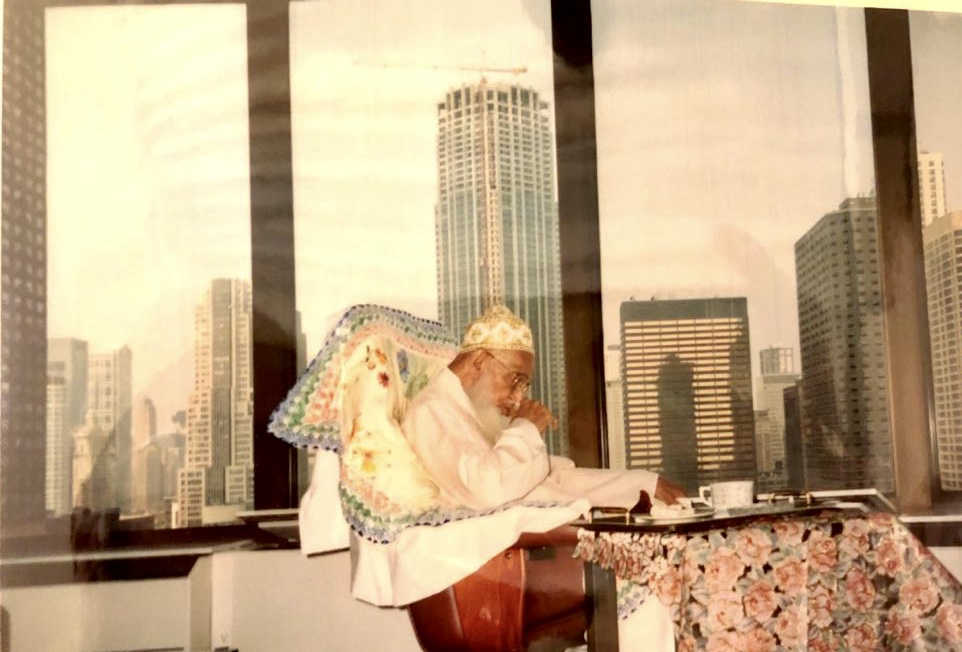
1-1
Moula RA in Shk Ammar Bhai’s backyard in 1986.
1 (1)
Moula RA at Shk Ammar Bhai’s apartment in downtown in 2001.

The image is the exclusive property of the contributor and Tazkerat, and may not be copied, printed or otherwise disseminated without permission.


Shk Ammar Bhai Moosaabhoy

Chicago, USA


In the means of shukr and zikr, anyone who is willing to share his/her’s acquaintance, incident or any experience with Moulana Muqaddas RA or Moulana Mufaddal Saifuddin TUS can mail it to dm@tazkerat.org & md@tazkerat.org

Aankhon Mein Jiski Hai Tere Khaak-e-Qadam Ki Qadr, Ikseer Ki Jahaan Mein Usko Talab Nahi

The desire to witness the spectacle of metal turning into gold and the miracle of the dead coming back to an immortal life have been at the heart of mankind’s pursuit of the elixir also known as the philosopher’s stone.

I can say with utmost conviction that I have lived the aforesaid transformations.

It was the year 2016 and Mufaddal Moula TUS was in Karachi for Syedna Taher Saifuddin’s RA milaad when I first got a glimpse of Moula in person. Taken along by my mother for the bethak I was lumbering behind her with a broken and bleeding toe amidst a massive crowd of women crying.

Hesitant, confused, and wanting to slip out of the queue at the first possible chance, I somehow reached the bethak. As I looked up to Moula, my eyes met his warm gaze and I froze.

The elixir was in effect. My life changed.

Fast-forwarding to 16th September 2017, Moula was in Karachi for Asharah Mubarakah and I was heading to Burhani Mahal for the bethak; however, this time with eyes full of tears, heart exploding with the desire to acquire the sight of his beaming countenance, and every inch of my existence willing to swim oceans and walk scorching deserts to get a touch of his hands.

This was not me. I was unable to comprehend what was happening to me. It was the elixir-pull.

As I neared Moula, I sobbed. Unlike the norm of salaam, I clasped both the arms of Moula and cried: “moula mein aapne nai choru, jab tak aap nahi kahenge ke aap mere ghar aaenge”.

The dealings of the bethak came to an impromptu halt.

Moula responded with a sparkling grin as I remained in the same state and repeated the very words for a fine ten to fifteen seconds.

As I walked back, the reactions on the faces of the people around Moula made me realize that I might have landed myself in hot water and that I will never be allowed to be in this place again.

Regardless, somehow, I was at the bethak again the very next day with my mother.

I was standing at a side in the hall eagerly hoping no one would remember me from the previous day when a behnsaab approached and asked me to get in the qadambosi queue. I hesitated initially as I did not want to be in the spotlight again after creating a scene less than twenty-four hours ago but submitted myself into the line upon insistence.

As I neared Moula, I saw the smile on his face widening, and making use of that, I voiced: “Moula mein aapko remind karwane aayee hun ke aapko mere ghar aana hai”.

The buzzing in the hall fell into complete silence as everybody stood in shock and awe.

Moula nodded and I bolted out of the hall.

On the 8th of October, Sunday, I was informed that Moula wished to visit my house. He remembered, was my first reaction to the news. As we scrambled to make preparations, I felt the house was grooming itself for Moula’s visit.

When I saw Moula walking towards my house, I broke down in tears in front of him and he stated: “pehla din awi ne mane kidu hatu ke mara ghare padharo, mein awi gayo”.

The next fifteen minutes seemed like a lifetime. We poured our hearts out to him in form of words, tears, and emotions. He listened to all of it, perceived the unsaid, and placed his haath mubarak on us assuring we need not worry as he is always going to be there.

Just before Moula was about to leave, he looked at me as I had my gaze fixated on him. My heart was crying a lot that I could not bring to words but I could perceive Moula was hearing it all.

At that moment, with tears running down my face and hands folded, I uttered: “I love you so much Moula”.

With moist eyes and a warm smile, Moula looked at me as a father would regard his daughter who has come back to life from death.

What is an elixir? The answer rests below.

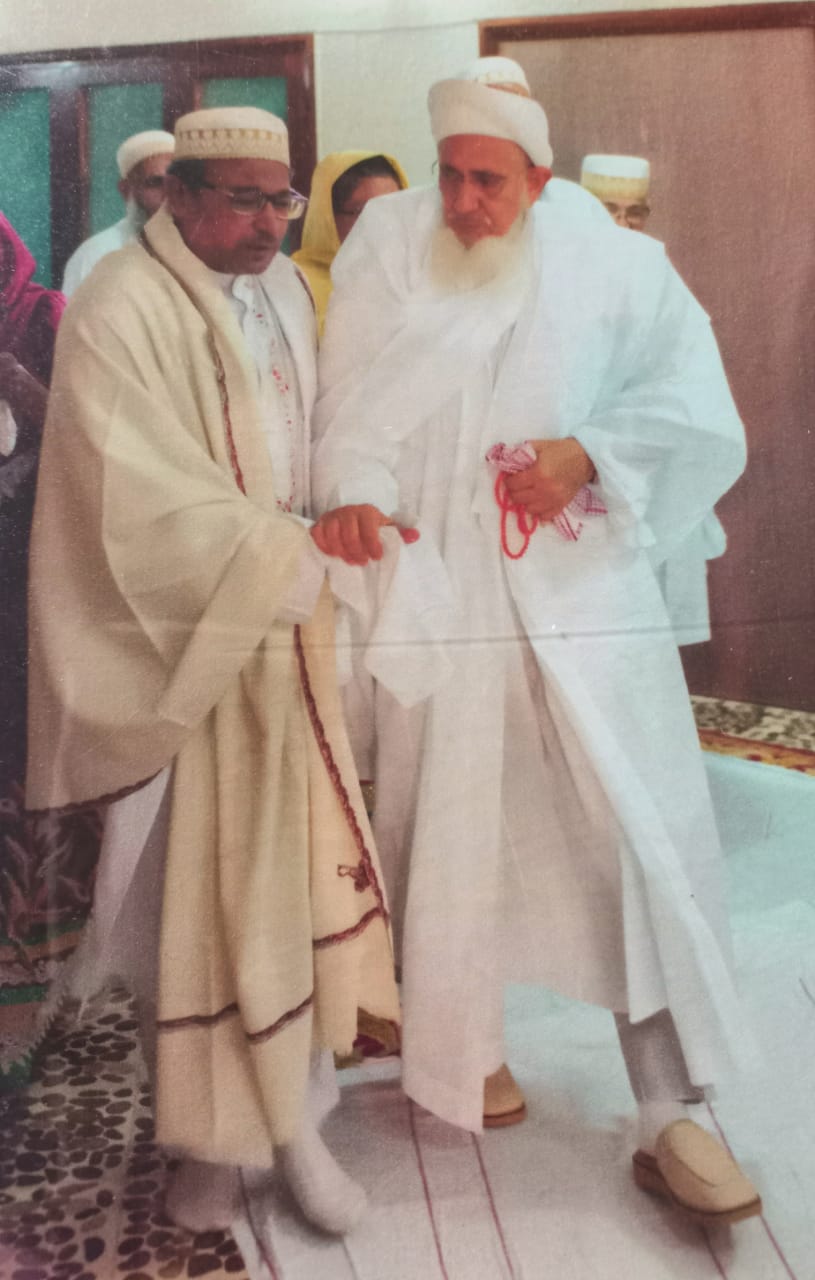
Mufaddal Moula arriving at Amatullah (Ambreen) Behn’s house.

The image is the exclusive property of the contributor and Tazkerat, and may not be copied, printed or otherwise disseminated without permission.


Behn Amatullah (Ambreen) Fakhruddin Bhai Valika

Karachi, Pakistan


In the means of shukr and zikr, anyone who is willing to share his/her’s acquaintance, incident or any experience with Moulana Muqaddas RA or Moulana Mufaddal Saifuddin TUS can mail it to dm@tazkerat.org & md@tazkerat.org

Mushkil Mein Gar Pukaroon Moula To Ho Kifayat, Kya Khoob Hai Ye Rishta Moula Se Mere Dil Ka

‘Parwardigaar’ – an expression in Persian literally meaning ‘the one who looks after someone’s upbringing sacrificing everything for the cause’; is what I utter whenever I call to memory Moulana Mohammad Burhanuddin RA and Moulana Mufaddal Saifuddin TUS.

Here is why:

Back in 2010 when I was expecting my son Burhanuddin, nauseous and bilious I used to barely eat at night. On one such instance, I went to sleep without eating anything at all.

Through the midnight, I had a dream where I saw Moulana Mufaddal Saifuddin TUS standing by the main gate of my building. As I walked towards the gate, I saw Moulana Mohammad Burhanuddin RA at the back seated in a car with a concerned look on his face.

When I came to the gate, Mufaddal Moula TUS extended towards me a dish of food in his hands pronouncing: “tame jama nathi ne, aa jami lo”. After a short pause, Moula TUS added “hamne gawara nathi ke hamara koi mumin raate bhuka sui”.

With tears in my eyes I said “jee Moula, mein jami lais”. At the very moment, the concerned look of Moulana Mohammad Burhanuddin RA turned into a beaming smile.

It was past midnight and with my hands folded and tears rolling down the cheeks, I uttered “Moula mara ghare to awiye” to which Mufaddal Moula TUS replied “hajhi hamne ghana gharo ma jawanu che”.

I woke up and decided to have something from the night’s mawaid thaali only to realize it contained the same food Moula brought for me in the dream.

Moulana Taher Saifuddin RA often said “mane din raat tamari fikar che, mara har saans ma tamari fikar che”.

Wherever, whenever, however, He is always there.


Behn Tasneem Mulla Yusuf Bhai Joharglasswala

Karachi, Pakistan


In the means of shukr and zikr, anyone who is willing to share his/her’s acquaintance, incident or any experience with Moulana Muqaddas RA or Moulana Mufaddal Saifuddin TUS can mail it to dm@tazkerat.org & md@tazkerat.org

Gar Jaan Talabi Fida-e-Janat, Sehl Ast Jawab-e-Imtehanat

گر جان طلبی فدای جانت

سهلست جواب امتحانت

My answer to all questions is easy;

‘May my life be sacrificed for you.’

At the start of my journey for my Hadi Ashara Imtehaan and Zikra  in 1419H/1998 from Bangalore to Surat, I came to know that I was expecting a child. Delighted at the news, I asked my doctor if it was safe for me to travel and was permitted to do the same.

On 11th Shaban we were blessed with zyafat sharaf of Syedna Mohammed Burhanuddin (RA).
 
As I proceeded for salam and presented my shukur najwa, which was a gold coin, Moula RA looked at me, opened the case and handed it to Busaheba Jawharat al Sharaf BS and stated “Nazrul Maqam AS che”.
 
Confused, I moved from there and told Busaheba that it was najwa. “Aqa Moula farmawe che Nazrul Maqam ma adaa karo”, she reiterated. 
 
Right after the bethak, I left for Bangalore.
 
Upon reaching, I suffered from vomiting and aches and assumed them as usual symptoms of pregnancy.
 
On 7th of Shehrullah al Moazzam, at twelve weeks of my pregnancy, I started to bleed and worriedly reached to my gynecologist who instructed me to urgently get a sonography done.
 
The sonographer, dumbfounded and appalled by the scan results, told me that he was finding it difficult to believe I was alive, let alone healthy. At the 8th week the fetus had stopped developing, hence was dead; and for a fetus to not cause poisoning or any sort of infection over such a long period was nothing short of a miracle.
 
As tears gathered in my eyes, my memory immediately rushed back to the zyafat day incident when I was eight-weeks pregnant.
 
Now a mother of three and living a healthy life, I remember Burhanuddin Moula RA in every passing breath and say: ‘May my life be sacrificed for you.’


Behn Alefiyah Sheikh Mufaddal Bhai Fakhri

Bengaluru, India


In the means of shukr and zikr, anyone who is willing to share his/her’s acquaintance, incident or any experience with Moulana Muqaddas RA or Moulana Mufaddal Saifuddin TUS can mail it to dm@tazkerat.org & md@tazkerat.org

Tere Ahwaal Pe Ehmad Dil Khasta Zarur, Nazar’e Lutf Shahe Kaun’o Makan Rakhte Hain

Al Hayy Al Muqaddas Syedna Mohammed Burhanuddin RA graced Calcutta with His presence 29 years ago, but little did I know that my fate was being rewritten.

Back then, during a ladies qadambosi bethak, my mother, with the 4 month-old me in her hands, was waiting in the queue. Her turn was yet to come, as a khidmatguzar showed up, “Maula farmave che ke farzand ni gardan ne sambhale”.

No distance too great for His RA nazar; no mumin overlooked from his extraordinary shafaqat.

Thereupon, when it was our turn to do qadambosi, Maulana RA instructed my mother to place me under His RA blessed feet: Exhibiting monumental amount of generosity, Maula RA gently placed His toe on my head.

Unable to contemplate the episode, we returned home.

3 years later, one fine day, my mother and I were aboard a hand-pulled rickshaw rushing full-speed, when in the midst of traffic commotion, the rickshaw operator applied sudden brakes. Losing all semblance of balance, I flew out of the rickshaw and fell squarely in the middle of the busy road.

As I laid unconscious with heaps of blood oozing out of my head, my mother, in a state of pain and panic started crying for help: zor zor si Burhanuddin Maula nu naam pukarva laaga. Out of nowhere a mumin bhai turned up, and we reached the hospital. As for my condition, I underwent a thorough examination. After several scans and x-rays, the surprised doctors informed us that there were no signs of an internal damage despite the nature of the accident. This, according to them was contrary to reason.

It was then, when we recalled what Burhanuddin Moula RA had done three years since.

Syedna Mohammed Burhanuddin graced Calcutta with his presence 29 years ago, and I am sure a lot of fates were rewritten, a lot of souls were reborn, a lot lives were revived, and a lot of miracles happened, and are still happening.

I am sure.


Fakhruddin Aliasghar Bhai Kothambwala

Pune, India


In the means of shukr and zikr, anyone who is willing to share his/her’s acquaintance, incident or any experience with Moulana Muqaddas RA or Moulana Mufaddal Saifuddin TUS can mail it to dm@tazkerat.org & md@tazkerat.org. 

Note : The content of the website is copyrighted and may not be reproduced/duplicated without the authors permission.